Imagine being able to ask your real estate portfolio a question and getting a clear answer back. Not a spreadsheet. Not a dashboard. An actual answer, using conversational AI.
For years, real estate technology has focused on storing information rather than helping people use it. Data lived in systems, reports were pulled on demand, and insights required time, interpretation, and experience. The friction was accepted as part of the job.
Conversational AI is changing that dynamic. In real estate, this shift is especially powerful because of the volume, fragmentation, and time sensitivity of operational data. Instead of clicking through tools and translating charts, teams can interact with their data the same way they would with a colleague. They can ask what is happening, why it is happening, and what needs attention next.
This guide explores how conversational AI is reshaping real estate, the tools making it possible, and what owners, operators, and teams should know as this technology moves from novelty to necessity.
Related: How to Use AI to Generate Property Performance Reports, in Minutes
What Is Conversational AI in Real Estate?
Conversational AI in real estate refers to technology that allows people to interact with data, systems, and workflows using natural language. Instead of clicking through dashboards or filling out forms, users can ask questions and receive clear, relevant answers.
This is different from basic chatbots. Traditional chatbots follow scripts and handle simple tasks like answering FAQs or scheduling tours. Conversational AI goes further. It understands context, pulls information from multiple sources, and adapts its responses based on what is being asked.
It also differs from traditional CRM tools and static automation. CRMs store information but still require users to search, filter, and interpret data themselves. Static automation follows fixed rules and triggers. Conversational AI acts more like an intelligent assistant, helping users explore data, surface insights, and understand what is happening without needing to know where the data lives or how to query it.
Conversational AI in Real Estate: Top 5 Applications
Conversational AI is showing up across many parts of real estate operations, helping teams work faster and communicate more clearly. Below are some of the most common and practical use cases today.
- Leasing Inquiries and Lead Engagement
- Tenant Communication and Support
- Investor Reporting and Portfolio Updates
- Internal Team Support and Knowledge Access
- Analytics and Data Q&A
1. Leasing Inquiries and Lead Engagement
Conversational AI helps respond to renter inquiries quickly and consistently. Prospects can ask questions about availability, pricing, or amenities and receive immediate answers. This improves response times and helps leasing teams capture interest without being overwhelmed by repetitive questions.
2. Tenant Communication and Support
For existing residents, conversational AI can handle routine requests like maintenance updates, policy questions, or general property information. This reduces back-and-forth emails and frees up onsite teams to focus on higher-value interactions.
3. Investor Reporting and Portfolio Updates
Conversational AI can simplify how owners and asset managers access performance information. Instead of pulling reports, investors can ask questions about occupancy, revenue trends, or portfolio health and receive clear summaries. This makes reporting faster and easier to understand.
4. Internal Team Support and Knowledge Access
Inside organizations, conversational AI acts as a knowledge assistant. Team members can ask questions about policies, processes, or performance metrics without searching through documentation. This is especially helpful for onboarding new staff and supporting distributed teams.
5. Analytics and Data Q&A
One of the most powerful uses of conversational AI is analytics Q&A. Teams can ask natural language questions about demand, pricing, occupancy, or performance and receive insights without running manual reports. This turns data access into a conversation rather than a technical task.
Top Pick: The Best 9 AI Tools for Real Estate Investors
How Rentana Works as a Conversational AI for Multifamily
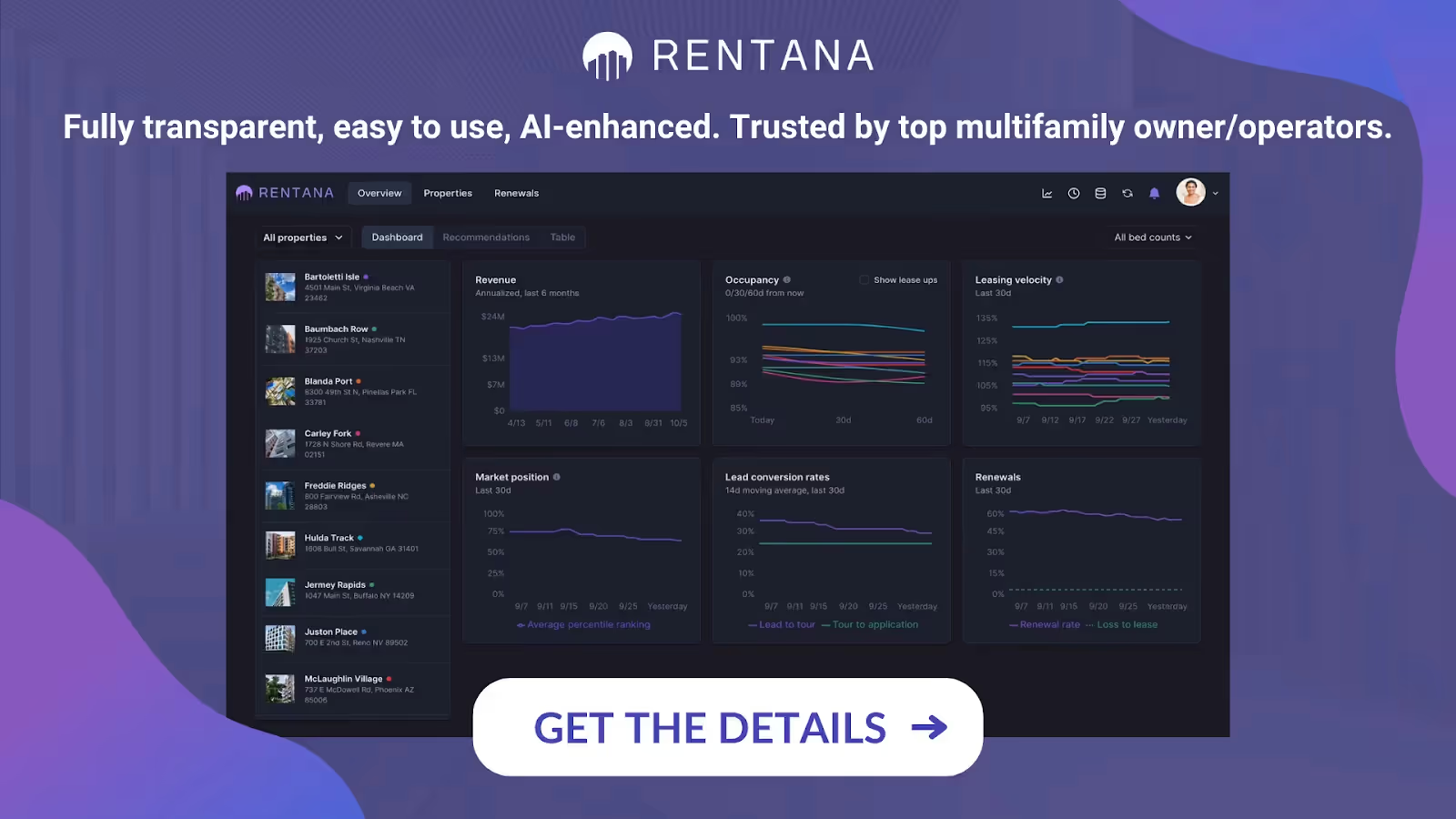
Rentana works as a conversational AI platform by turning complex multifamily data, into clear, accessible answers rooted in real pricing, demand, and performance signals. Instead of forcing operators to dig through dashboards or reports, Rentana helps them understand what is happening across their portfolio and why, in a way that feels intuitive and natural.
At its core, Rentana connects pricing, demand, occupancy, and performance data into a single intelligence layer. Operators can explore insights without needing to know where the data lives or how it is calculated. The platform surfaces key signals, explains changes in performance, and guides attention to what matters most, much like an experienced analyst sitting alongside the team.
Rentana’s conversational approach is especially powerful for revenue and performance decisions. It helps teams quickly understand why a unit is underperforming, whether demand supports pricing changes, or how renewals should be handled as leases approach expiration. Instead of static reports, teams get context and direction.
By acting as an always-on assistant for analytics and reporting, Rentana reduces friction between questions and answers. This allows multifamily operators, asset managers, and owners to move faster, stay aligned, and make confident decisions based on real-time market behavior rather than assumptions.
Key Benefits of Conversational AI in Real Estate for Owners, Operators, and Teams
Conversational AI in real estate delivers value by reducing friction in how people access information and make decisions. Instead of adding another system to manage, it simplifies how teams interact with data and workflows.
Faster Response Times
Conversational AI provides immediate answers to questions that would normally require emails, meetings, or report requests. Whether responding to a prospect, a resident, or an internal stakeholder, faster responses improve experience and prevent delays that can lead to missed opportunities.
Less Manual Work for Teams
Many day-to-day tasks in real estate involve searching for information, pulling reports, or repeating the same explanations. Conversational AI reduces this manual effort by surfacing answers automatically. This frees teams to focus on strategic work instead of administrative tasks.
Clearer Insights Without Interpretation
Data is only useful when it is easy to understand. Conversational AI presents information in plain language, reducing the need to interpret charts or spreadsheets. Teams gain clarity faster and spend less time debating what the data means.
Faster, More Confident Decisions
When answers are easy to access and clearly explained, decisions happen sooner. Conversational AI helps teams move from question to action quickly, improving agility across leasing, operations, and portfolio management.
Together, these benefits help owners, operators, and teams work more efficiently while staying aligned with what is happening across their properties and portfolios.
Read Also
- Generative AI in Real Estate: Top 11 Use Cases
- 21+ Ways Real Estate Agents Can Use AI Easily
How to Choose a Good Conversational AI Tool for Real Estate
Not every conversational AI tool is built with real estate in mind. Choosing the right one means looking beyond surface-level chat features and focusing on how well it supports real operational decisions.
Start with data access and connectivity. A strong conversational AI tool should connect directly to the systems where your leasing, pricing, occupancy, and performance data live. If it cannot reliably access real data, the answers will lack depth and usefulness.
Next, focus on accuracy and explainability. The best tools do not just give answers, they explain how those answers were formed. Clear reasoning builds trust and makes it easier for teams to act on insights and communicate decisions to stakeholders.
Ease of use is just as important. A good conversational AI tool should feel intuitive and fit naturally into daily workflows. Teams should be able to ask questions in plain language and get clear, relevant responses without training or technical expertise.
Finally, consider security and scalability. Real estate data is sensitive, so enterprise-grade security is essential. The tool should also scale as portfolios grow, supporting more properties, users, and questions without losing performance.
The right conversational AI tool should feel like a knowledgeable assistant that understands real estate, helps teams move faster, and makes complex information easier to work with every day.
Related: The Best AI Tool for Rental Market Analysis by Zip Code
The Future of Conversational AI in Real Estate
Conversational AI in real estate is still early, but its direction is becoming clear. What started as simple chat and support tools is evolving into a core layer of how teams interact with data, systems, and decisions.
In the future, conversational AI will move beyond answering questions to actively guiding strategy. Instead of asking what happened, teams will ask what is likely to happen next and what actions make the most sense. Conversational AI will surface risks, highlight opportunities, and suggest next steps before problems appear.
It will also become more deeply embedded into daily workflows. Rather than opening multiple tools, operators will rely on conversational interfaces to access insights, review performance, and understand changes across their portfolios. This will reduce friction and make analytics feel more natural and accessible to every role.
As the technology matures, conversational AI in real estate will shift from a helpful add-on to a trusted operating partner. For real estate teams, the future is not about replacing human judgment, but about enhancing it with faster access to insight, clearer context, and more confident decision-making.