Staffing
Centralized
Shared leasing team across properties
On-Site
Leasing staff dedicated to each property


Leasing used to be simple. A prospect walked into the leasing office, spoke with the on-site team, and hopefully signed a lease. But as portfolios grew, leasing channels multiplied, and renter expectations changed, that model started to show its limits.
Today, many property teams are rethinking how leasing gets done.Centralized leasing for multifamily portfolios allows operators to manage inquiries, tours, and leasing activity from a shared team or hub, helping improve response times and standardize the prospect experience across communities. This article explains what centralized leasing is, how centralized leasing works in practice, and when it makes sense for property managers and owners looking to scale more efficiently.
Related: Lease Renewal Agreement for Landlords: Complete Guide
Centralized leasing is a leasing model where leasing activities are handled by a shared team or system instead of being managed independently at each property.
Rather than having every property rely solely on on-site staff to respond to leads, answer questions, and manage tours, centralized leasing brings those tasks together in a single, coordinated leasing function that supports multiple properties at once. This central team supports multiple properties at the same time, often using shared tools, processes, and data.
For example, a property management company with 15 apartment communities may route all new inquiries to a centralized leasing team. When a prospect fills out a form or calls about availability, the centralized team responds, answers questions, shares pricing and availability across multiple properties, and schedules tours. The on-site team may only step in for in-person tours or move-in coordination.
In a centralized leasing setup, prospects may never interact directly with on-site leasing staff until later in the process, or at all. Initial inquiries, follow-ups, and even applications can be handled remotely by the centralized team. This centralized leasing approach helps ensure faster response times, more consistent messaging, and better lead coverage across an entire portfolio.

Centralized leasing and on-site leasing take very different approaches to how leasing work is staffed and managed. In an on-site model, leasing agents are physically located at each community and handle leasing activity for that specific property. This often works well for individual communities but can lead to inconsistent coverage and performance across a portfolio.
Centralized leasing consolidates leasing responsibilities into a shared team that supports multiple communities. Instead of relying on each site to manage its own leads and follow-ups, inquiries are routed to a central team using standardized processes. This structure makes it easier to manage response times, staffing levels, and leasing activity at scale.
From a cost and performance perspective, on-site leasing ties staffing directly to each property, which can make scaling more expensive and unpredictable. Centralized leasing allows staffing to flex based on lead volume rather than property count, often resulting in more consistent performance and better coverage during peak periods.
The renter experience also differs between the two models. On-site leasing offers more face-to-face interaction early in the process, while centralized leasing relies more on digital communication and virtual tools. Centralized models tend to deliver faster, more consistent responses, while on-site experiences can vary by property and staff availability. For larger or growing multifamily portfolios, centralized leasing often provides stronger operational consistency and better resource allocation across communities.
Top Pick: 7 Types of Commercial Real Estate Leases, Explained
Centralized leasing follows a structured workflow that routes prospects through a shared system and team instead of relying on individual on-site offices. While the exact setup can vary by portfolio, the process generally follows the same core steps. Depending on the operating model, centralized leasing teams may handle early-stage tasks like lead qualifications and tour scheduling, or take a more comprehensive role that includes virtual tours, application support, and full prospect engagement from first contact through lease signing.
The process starts when a prospect submits an inquiry.
Leads can come from multiple sources, such as listing sites, property websites, phone calls, or chat tools. Instead of going directly to an on-site leasing office, all inquiries are routed to a centralized leasing queue.
At this stage, leads are typically tagged by property, unit type, location, or move-in timeframe, so they can be handled efficiently by the centralized team.
Read Also: How to Calculate Occupancy Rate (Formula + Examples)
Once a lead enters the system, a centralized leasing agent responds.
This team is trained to handle inquiries across multiple properties. They answer questions about availability, pricing, floor plans, and policies, often across an entire portfolio rather than a single location. Communication usually happens via phone, email, text, or chat.
Centralized leasing teams typically work from a shared, up-to-date database that includes portfolio-wide information on availability, pricing, amenities, policies, and property details. This allows agents to provide accurate, consistent answers regardless of which property the prospect is considering.
Because the team works from a shared system, messaging and information stay consistent regardless of which property the prospect is interested in.
After initial contact, the centralized leasing team qualifies the prospect.
This step involves understanding what the prospect is looking for, such as budget, unit size, location preference, and desired move-in date. If the original property is not a fit, the agent may suggest alternative properties within the same portfolio. This cross-property visibility is one of the biggest advantages of centralized leasing, allowing teams to match prospects with the best available option across multiple communities rather than losing the lead entirely.
Qualification helps narrow options early and ensures prospects are routed to the most relevant next step.
Once a prospect is qualified, the next step is scheduling a tour or moving forward in the leasing process.
Tours may be virtual, self-guided, or in-person. In many centralized models, the centralized team schedules the tour while the on-site team handles the physical showing if needed. This is one of the key handoff points between centralized and on-site teams. Some centralized leasing teams also conduct virtual tours or initial walkthroughs, allowing prospect to explore options remotely before ever visiting a property.
Clear handoff rules help avoid confusion about responsibilities and ensure the prospect has a smooth experience.
After the tour, prospects who are ready to move forward can complete applications through shared leasing systems.
The centralized team may continue to manage follow-ups, application status updates, and documentation, or hand off this stage to on-site or regional teams depending on the operating model.
Throughout this stage, centralized systems track progress so everyone involved can see where each prospect stands.
Centralized leasing can also improve how marketing activity supports the broader portfolio. In a traditional on-site model, marketing efforts are often managed property by property. Leads generated for one community typically remain tied to that location, even when availability is limited or leasing activity is already strong.
With a centralized leasing structure, teams have visibility across multiple properties at once. This makes it easier to provide prospects with consistent information about availability, pricing, and options across the portfolio when appropriate. If a property has limited availability, the centralized team can ensure prospects are aware of other communities within the same portfolio that may also meet their needs.
This added visibility can help operators make better use of existing marketing activity by ensuring inquiries are handled consistently and that prospects receive timely responses, even during periods of high lead volume. Over time, centralized leasing can support more balanced exposure across properties without requiring each community to manage marketing activity in isolation.
Behind the scenes, centralized leasing relies heavily on shared tools and reporting.
Leasing activity, response times, conversion rates, and occupancy impact are tracked across properties. This visibility helps teams adjust workflows, staffing, and priorities as demand changes.
Because all leasing activity flows through one system, leadership has a clearer picture of performance across the entire portfolio. This centralized visibility is one of the primary reasons centralized leasing is increasingly adopted by large multifamily operators looking to improve consistency, efficiency, and leasing performance at scale.
Read Also: How to Forecast Occupancy in Multifamily Real Estate
Centralized leasing is often adopted to solve operational challenges that appear as portfolios grow. Property teams use this model to streamline workflows, improve coverage, and maintain consistency across multiple locations. It also helps preserve sales opportunities across a portfolio by ensuring prospects who may not qualify or find availability at one property can still be supported with information about other suitable options within the same portfolio, rather than being lost due to a single-property interaction.
Centralized leasing reduces duplicated effort across properties.
Instead of each site managing its own inbox, calls, and follow-ups, a single centralized leasing team handles leasing activity using shared workflows. This reduces missed leads, speeds up response times, and allows leasing agents to focus on prospects and in-person tours rather than administrative tasks.
For property managers overseeing multiple assets, this structure makes day-to-day leasing operations easier to manage and optimize.
Centralized leasing helps ensure that every inquiry receives timely attention.
Because leasing responsibilities are shared, coverage does not depend on whether a specific property is short-staffed, busy, or closed. Leads can be answered during extended hours and routed to available agents without disrupting on-site operations. Because in-person tours can take 30 to 60 minutes, on-site agents are often unavailable to answer calls or respond to new inquiries during that time. A centralized leasing team helps keep response time consistent by handling incoming calls, scheduling tours, and managing follow-ups while on-site staff focus on showing apartments and closing leases.
This model is especially useful for portfolios spread across multiple markets or time zones.
With centralized leasing, processes and messaging are standardized.
Prospects receive consistent information about pricing, policies, and availability, regardless of which property they contact. This reduces confusion and ensures that leasing standards are applied evenly across the portfolio. Standardized communication and documented processes can also support fair housing compliance by helping ensure that information is delivered consistently across communities and teams.
For ownership groups and regional managers, consistency also makes performance easier to measure and compare.
Related: What is the 2 Rule in Real Estate?
Centralized leasing supports growth without requiring a proportional increase in on-site staff.
As new properties are added, they can be integrated into existing leasing workflows rather than staffed from scratch. This allows teams to scale operations more efficiently while maintaining control over leasing quality. Staffing can be adjusted more flexibly as demand changes, with centralized teams expanding coverage during high lead volume periods and reallocating support across properties as needed.
For expanding portfolios, centralized leasing provides a structure that can grow alongside the business.
Centralizing leasing can help stabilize both staffing costs and coverage reliability across the portfolio. often leads to more stable and predictable staffing costs.Instead of fluctuating on-site labor needs at each property, teams can plan staffing centrally based on lead volume and demand. This makes budgeting easier and reduces the risk of over- or under-staffing individual sites.
It also helps maintain leasing continuity when on-site staff are unavailable due to illness, turnover, or scheduling gaps. Because coverage is shared, properties can continue responding to inquiries and scheduling tours even when local staffing is temporarily limited. In many cases, a centralized team structure can also be more cost efficient than maintaining dedicated leasing coverage at every individual property.
For owners and operators, this predictability is a key financial advantage.
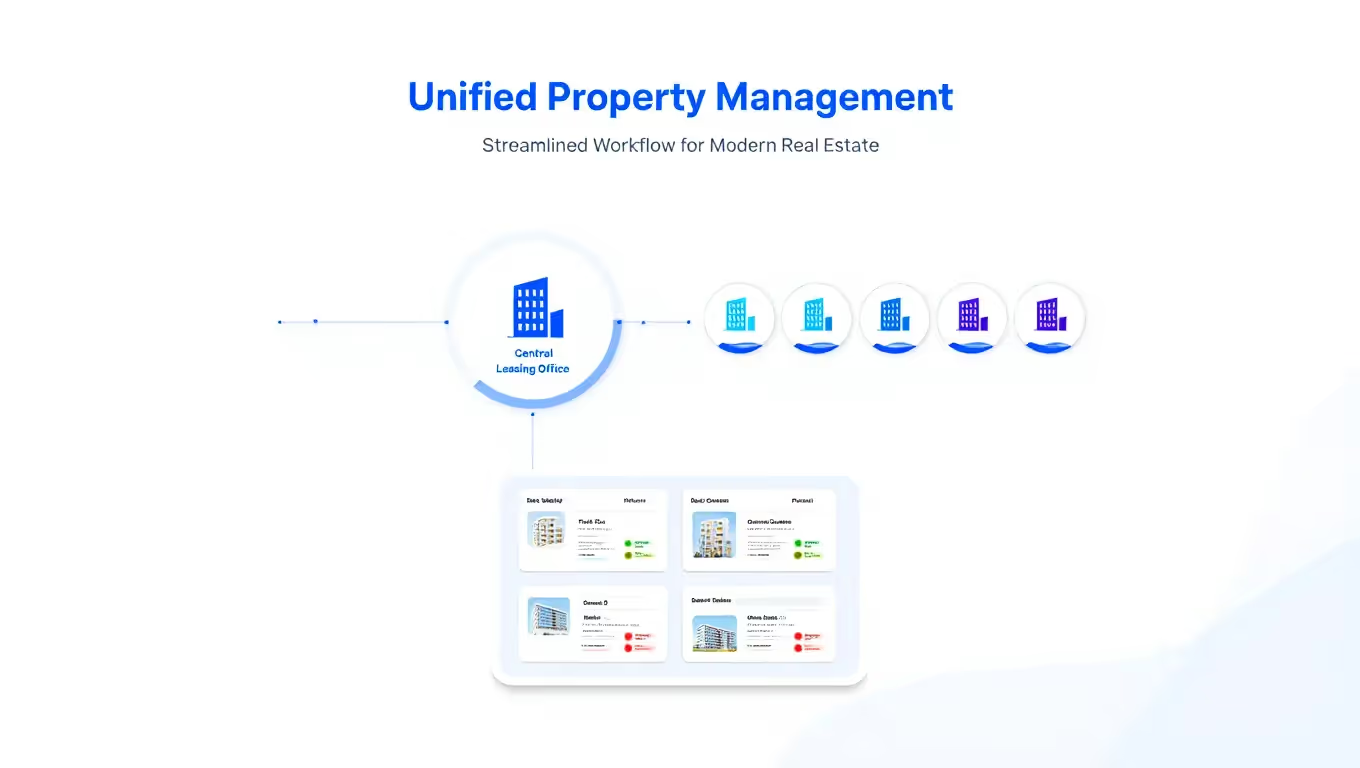
Centralized leasing is not the right fit for every portfolio. It tends to work best in specific operating environments where scale, complexity, or growth makes on-site leasing harder to manage consistently. For operators managing multiple communities, centralized leasing can provide structure, consistency, and visibility that become harder to maintain as portfolios expand.
Centralized leasing often makes sense for multifamily operators managing several properties within the same region or across markets.
When each property runs its own leasing operation, differences in staffing, experience, and availability can lead to uneven performance. Centralized leasing creates a shared structure that allows teams to manage leads and tours more consistently across the portfolio. This model is especially effective when properties share similar unit types, pricing bands, and renter demographics, making it easier for a centralized team to support inquiries across multiple communities.
This model is especially effective when properties share similar unit types, pricing bands, and renter profiles.
Related: How to Manage Large Multifamily Portfolios
Portfolios made up of scattered-site or geographically distributed assets are strong candidates for centralized leasing.
In these cases, on-site leasing coverage may be limited or inconsistent, and prospects often rely on digital communication rather than walk-ins. Centralized leasing allows a remote team to manage inquiries, schedule tours, and guide prospects through the leasing process without depending on physical offices. This approach helps maintain consistent leasing coverage and communication standards even when properties are spread across wide areas or lack full-time on-site staff.
This approach helps maintain leasing coverage even when properties are spread across wide areas.
Centralized leasing is well suited for operators that are actively expanding.
As new properties are added, staffing each location individually can slow growth and increase costs. Centralized leasing allows teams to absorb additional leasing volume without rebuilding processes for every new asset. It creates a repeatable operating model that can be extended to new communities. Helping maintain consistency in how leads are handled and how leasing activity is managed during period of rapid growth.
For growing operators, this model supports expansion while maintaining operational control.
When lead volume is high, on-site teams can become overwhelmed, leading to slow response times and missed opportunities.
Centralized leasing helps distribute lead volume across a team rather than concentrating it at individual properties. This improves responsiveness and reduces the risk of leads falling through the cracks during peak demand periods. By managing inquiries through a shared queue, centralized teams can help ensure prospects receive timely follow-up even during busy leasing seasons, helping properties maintain consistent engagement as demand fluctuates.
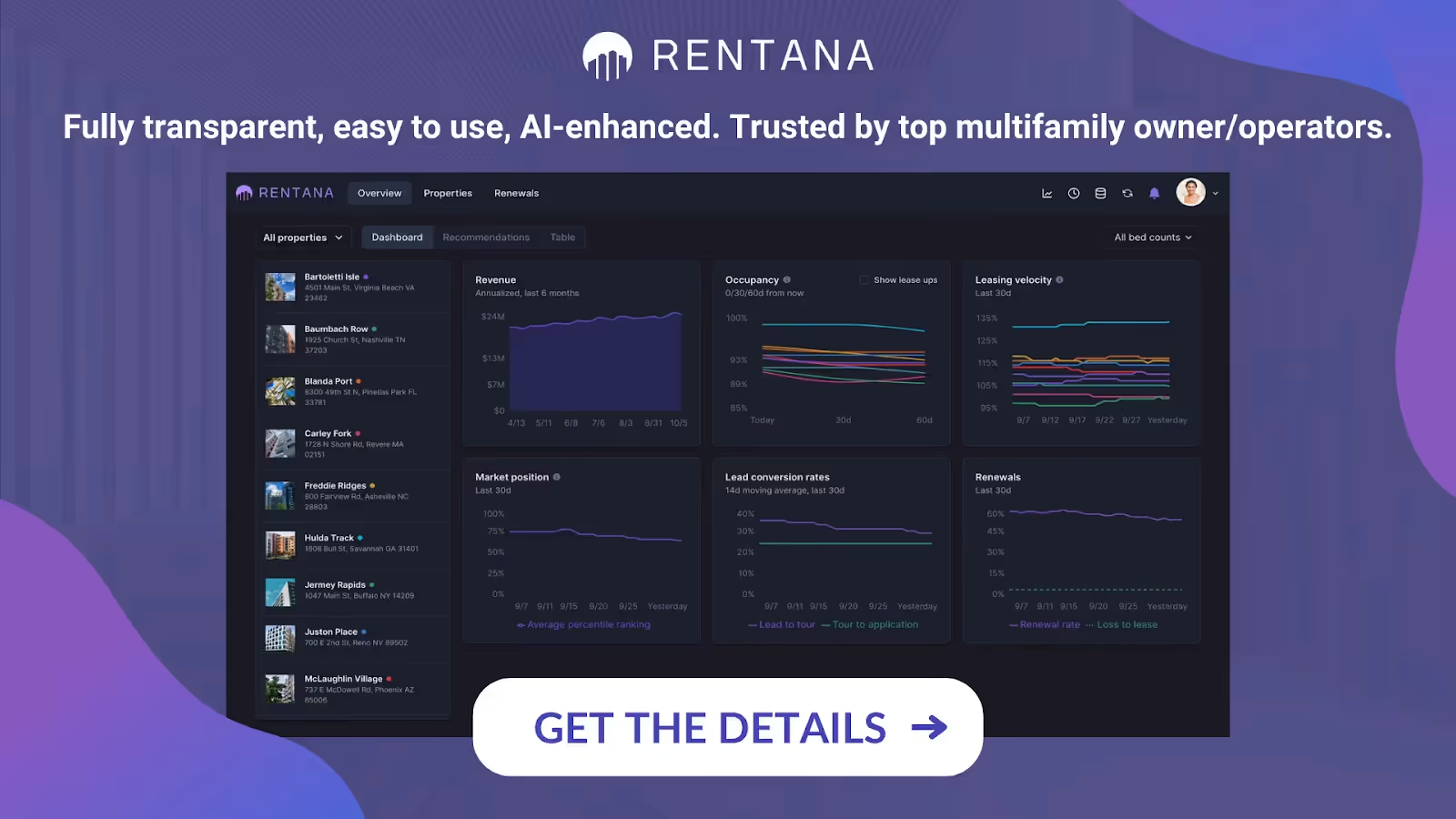
In multifamily, centralized leasing depends on having accurate, up-to-date information across multiple properties. Leasing teams need clear visibility into availability, pricing context, and performance trends so that they can respond to inquiries quickly and consistently, especially when supporting large portfolios across different markets.
Rentana helps centralized leasing teams operate with greater confidence by providing shared access to real-time property and portfolio data. Centralized users can be granted access to specific properties, regions, or entire portfolios, allowing them to view current availability, upcoming exposure, and performance signals through portfolio and property dashboards. This visibility makes it easier for centralized teams to answer questions accurately and stay aligned with on-site operations.
Role-based permissions can also be customized to standardize how centralized leasing teams interact with the platform, including read-only access, pricing visibility or management-level oversight. This helps maintain consistency across teams while ensuring the right people have the right level of information without overcomplicating workflows.
Rentana also supports more consistent communication by giving centralized teams access to the same pricing context, availability data, and performance insights used by revenue and operations teams. Instead of relying on outdated reports or checking multiple systems, centralized agents can reference a single source of truth when discussing availability, timing, and general leasing conditions across the portfolio.
Because Rentana connects availability trends, demand signals, and forecasted exposure in one place, centralized leasing teams can better understand how conditions are evolving across properties. This helps teams stay informed about upcoming availability, shifts in leasing momentum, and property-level changes that may influence conversations with prospects, without need to rely solely on on-site updates.
By bringing portfolio visibility, role-based access, and real time performance context into one platform, Rentana supports centralized leasing as part of a more coordinated operating model. Leasing, revenue, and operations teams can work from the same information, helping create a more consistent experience for prospects while keeping internal teams aligned across multiple communities.
Before moving to a centralized leasing model, property teams should evaluate a few key factors.
A successful centralized leasing transition depends on having the right systems, clear processes and strong coordination between centralized and on-site teams.
First, assess whether systems are in place to support shared workflows and visibility across properties. Centralized leasing relies heavily on clear data, consistent processes, and defined handoffs between teams.
Second, consider how on-site teams will interact with the centralized team. Clear roles and communication are essential to avoid confusion or duplicated effort. Defining who handles inquiries, scheduling, tours, applications, and follow-up at each stage of the leasing process helps create a smoother experience for both teams and prospects.
Finally, think about the renter experience. Centralized leasing should make it easier for prospects to get information and move forward, not harder. The goal is a smoother, more consistent leasing journey. Response times, accuracy of information, and clear handoffs between centralized and on-site staff all play an important role in shaping how prospects experience the leasing process.
Don’t Miss: The Best AI Tools for Real Estate Investors
Centralized leasing is not about replacing on-site teams, but about rethinking how leasing work gets done as portfolios grow. For multifamily operators managing multiple communities, centralized leasing offers a way to handle more leads, create consistency, and scale operations without adding complexity at every property. By centralizing leasing workflows, teams can improve responsiveness, standardize communication, and support portfolio-wide coverage as demand fluctuates.
That said, centralized leasing is not one-size-fits-all. The right model depends on portfolio size, team structure, renter expectations, and the systems in place to support shared workflows. Some operators adopt a fully centralized approach, while others use a hybrid model that blends centralized support with on-site presence. Both models can be effective when roles, processes, and communication channels are clearly defined.
What matters most is visibility and coordination across leasing, pricing, and performance goals. When teams have a clear view of performance and demand, they can make better decisions at every stage of the leasing lifecycle. Centralized leasing, supported by the right technology and data visibility, can serve as a strong foundation for more efficient, consistent, and predictable multifamily operations.