Multifamily teams have more data than ever, yet many still feel like they are overwhelmed with information without clear direction flying blind. Reports are scattered across systems, insights arrive too late, and answering simple questions like “What needs attention today?” often takes far too long. As portfolios grow and markets move faster, traditional analytics tools struggle to keep up.
This is where the idea of an AI assistant changes everything. Instead of manually pulling reports and interpreting dashboards, multifamily teams can rely on intelligent systems that surface insights, explain what is happening, and guide next steps in real time. The best AI assistants do not only report on performance, they help teams act on it.
In this article, we discuss what makes a great AI assistant for multifamily analytics and reporting, and why platforms like Rentana are redefining how owners and operators understand and manage performance.
Related: The Best Multifamily Software for Investors & Property Managers
Why Multifamily Teams Need an AI Assistant Today
Modern multifamily teams are not short on data. They are short on time, clarity, and precision in decision-making. Below are the biggest pain points operators face today and why an AI assistant has become essential.
Too Much Data, Spread Across Too Many Systems
Pricing reports, leasing activity, occupancy trends, market comps, renewal schedules, and performance metrics often live in different tools. Pulling everything together requires manual effort and constant switching between systems. By the time the data is organized, the market may already look different.
An AI assistant helps by pulling key signals into one place and presenting them in a way that is easy to understand and act on.
Insights Arrive Too Late to Be Useful
Traditional reporting tools are built to summarize what already happened. Reports are often generated weekly or monthly, which means teams react after performance has already shifted. In fast-moving markets, even small delays can lead to missed revenue or unnecessary vacancy.
An AI assistant works continuously, surfacing changes in demand, pricing, and performance as they happen rather than after the fact.
Related: How to Use AI for Multifamily Investing and Reporting
Static Dashboards Create More Work, Not Less
Dashboards show numbers, but they still require interpretation. Teams must figure out what changed, why it changed, and what to do next. This adds friction and slows down decision-making, especially for large portfolios.
A true AI assistant highlights what matters most, explains the context behind it, and helps prioritize next steps through objective, non-emotional analysis, instead of leaving teams to connect the dots on their own.
Growing Portfolios Make Manual Analysis Unsustainable
As portfolios expand, it becomes harder to monitor performance consistently across properties and markets, each with different demand patterns and performance baselines Or where performance expectations vary widely. Small issues and market specific underperformance can easily slip through the cracks until they become larger problems.
An AI assistant scales with the portfolio, monitoring performance continuously and helping teams focus their attention where it is needed most.
Decision-Making Needs to Be Faster and More Confident
In today’s environment, waiting for perfect information is no longer an option. Operators, asset managers, and owners need to make decisions quickly and explain them confidently.
An AI assistant supports this by combining real-time data, explainable insights, and clear guidance, allowing teams to act faster and with greater confidence even as complexity increases.
Top Pick: Choosing a Multifamily Market Analytics Software: A Guide
What Makes a Great AI Assistant for Multifamily Analytics?
A great AI assistant for multifamily analytics does more than show data. It helps teams understand what is happening and what to do next. The most effective systems work with real-time market information so insights reflect current conditions rather than outdated reports.
They explain their recommendations clearly, showing the reasoning and context behind every insight so teams can trust and act on them.
Strong AI assistants also operate at the unit and unit-type level instead of relying on property-wide averages. This level of detail leads to more accurate pricing, better renewal decisions, and fewer missed opportunities.
Most importantly, they provide actionable guidance rather than static dashboards, highlighting what needs attention and helping teams prioritize their next steps.
Finally, ease of use matters. The best AI assistants fit naturally into existing workflows and are easy to adopt across teams. When insights are clear, timely, and simple to act on, analytics becomes a daily advantage instead of an extra task.
Why Rentana is the Best AI Assistant for Analytics & Reporting: Real-World Use Cases
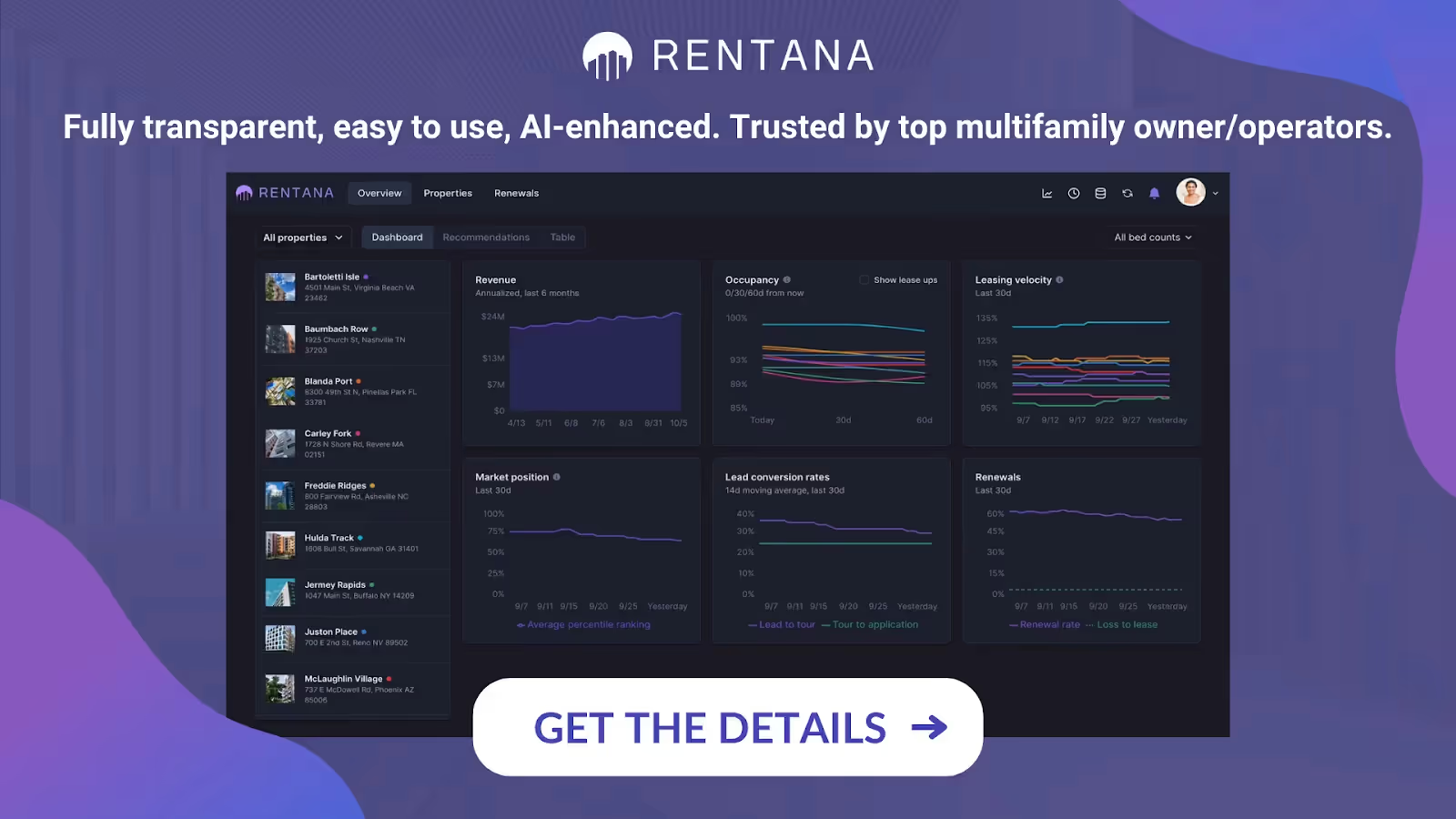
Rentana is designed to function like an AI assistant for multifamily teams, not just another reporting tool. Instead of asking users to pull reports, interpret dashboards, and connect the dots on their own, Rentana organizes data, surfaces insights, and helps guide decisions across the moments that matter most. Below are the key real-world ways Rentana supports analytics, reporting, and action for owners, operators, and asset managers.
1. Portfolio Reporting and Performance Visibility
Rentana gives teams an immediate view of portfolio health without requiring hours of manual reporting. At a high level, operators can see how portfolios and properties are performing using simple red, yellow, and green indicators across a variety of metrics. This makes it easy to understand where performance is on track and where attention is needed.
Instead of digging through spreadsheets, teams can quickly identify underperforming assets, compare performance across markets, and prioritize follow-up. This turns portfolio reporting into an ongoing, real-time process rather than a monthly exercise.
2. Pricing Reviews and Revenue Decisions
Pricing reviews are one of the most important and time-consuming tasks in multifamily operations. Rentana streamlines this process by analyzing demand signals, leasing velocity, unit performance, and public market conditions - delivering clear, easy to digest insights and visual contexts that help teams to validate decisions and surface internal data issues early. to support pricing decisions.
Rather than manually reviewing each unit, teams can see where pricing appears supported and where adjustments may be needed. Rentana also explains the context behind these insights, helping teams make faster, more confident pricing decisions without relying on fixed rules or gut instinct.
3. Demand Analysis and Market Awareness
Understanding unit demand is critical, but demand does not show up in a single metric. Rentana acts as an assistant by pulling together signals like inquiries, tours, conversions, and forecasted exposure to show how demand is changing over time.
This helps teams spot demand slowdowns early, understand seasonal patterns, and respond before occupancy is affected. Instead of reacting to vacancy after it happens, operators gain visibility into demand trends as they develop.
4. Lease Renewal Planning and Execution
Lease renewals are a major driver of both revenue stability and turnover costs. Rentana supports renewal planning by showing how demand, unit performance, and market conditions are shifting as leases approach expiration.
With this context, teams can decide when to send renewal offers and how to structure pricing in a way that supports retention without sacrificing income. Renewals become proactive and consistent rather than rushed or reactive.
Read Also: What is a Good Cap Rate for a Multifamily Property?
5. Ongoing Performance Monitoring and Risk Detection
Rentana continuously monitors performance across units, properties, and portfolios. It highlights patterns like rising days vacant, weakening demand, or performance gaps between similar assets.
This ongoing monitoring helps teams catch issues early and adjust strategy before revenue is impacted. Instead of waiting for end-of-month reports, operators can address risks as they appear.
From Insight to Action, Every Day
What ties all of these use cases together is Rentana’s focus on action. The platform does not just present data. It helps teams understand what matters, why it matters, and where to focus next.
By acting as an AI assistant rather than a static reporting tool, Rentana supports day-to-day decision-making across pricing, leasing, renewals, and portfolio management, helping multifamily teams move faster, stay aligned with the market, and operate with greater confidence.
You Might Like: Is Multifamily Considered Residential or Commercial?
Conclusion on AI Assistant for Multifamily Analytics
Multifamily analytics no longer needs to be complicated to be powerful. As markets move faster and portfolios grow more complex, the teams that succeed are the ones with clear visibility and the ability to act quickly. An AI assistant bridges the gap between data and decisions by turning information into insight and insight into action.
The best AI assistants for multifamily do not replace human judgment. They strengthen it by surfacing what matters, explaining why it matters, and helping teams focus their time where it has the greatest impact. Rentana shows how this approach can transform analytics and reporting from a reactive task into a daily advantage, giving multifamily teams the clarity and confidence they need to stay ahead.