Operators are facing one of the strangest moments the industry has seen in decades as the multifamily market heads into 2026.
Apartment construction has hit a fifty-year high (Stateline), vacancy is trending upward (Census), and rents are softening (CoStar). In spite of this, nearly every major research group continues to emphasize the same theme: the U.S. is still millions of homes short (Zillow). It may sound counterintuitive, but both can be true, and right now they are.
Record completions are creating real short-term pressure, especially in high-delivery markets like Austin, Phoenix, and parts of Florida. Meanwhile, long-term demand remains fundamentally strong.
When these two forces clash, operators find themselves managing a landscape that appears contradictory in headlines but is very real in daily operations: expanding renewal spreads, sluggish rent roll growth, and heightened competition for every qualified resident.
A Year of Record Supply and Record Questions
According to NMHC’s Research Notes: Reconciling the Apartment Shortage with Recent Record Apartment Completions, multifamily completions rose 35% in 2024, reaching 591,700 units. This brings completions to the highest level since 1974.
For an industry used to chronic undersupply, this kind of delivery spike is unusual. But the impact is uneven: some metros are absorbing new supply quickly, while others are burdened by a large inventory increase.
In early 2025, national vacancy sat at 8.2%, just below its Q4 2024 peak of 8.3%. But the national picture obscures the larger swings happening locally:
- Austin, TX: 15.4% vacancy, -4.3% annual rent change
- Naples, FL: 15.7% vacancy, -4.7% annual rent change
- Phoenix, AZ: 12.0% vacancy, -2.7% annual rent change
These metros aren’t having issues due to a lack of demand. Instead, they’re facing challenges because supply has come in much faster than usual absorption rates.
Related: How to Conduct an End-of-Year Audit for Your Multifamily Asset
How is There Still a 4.7 Million-Unit Housing Deficit?
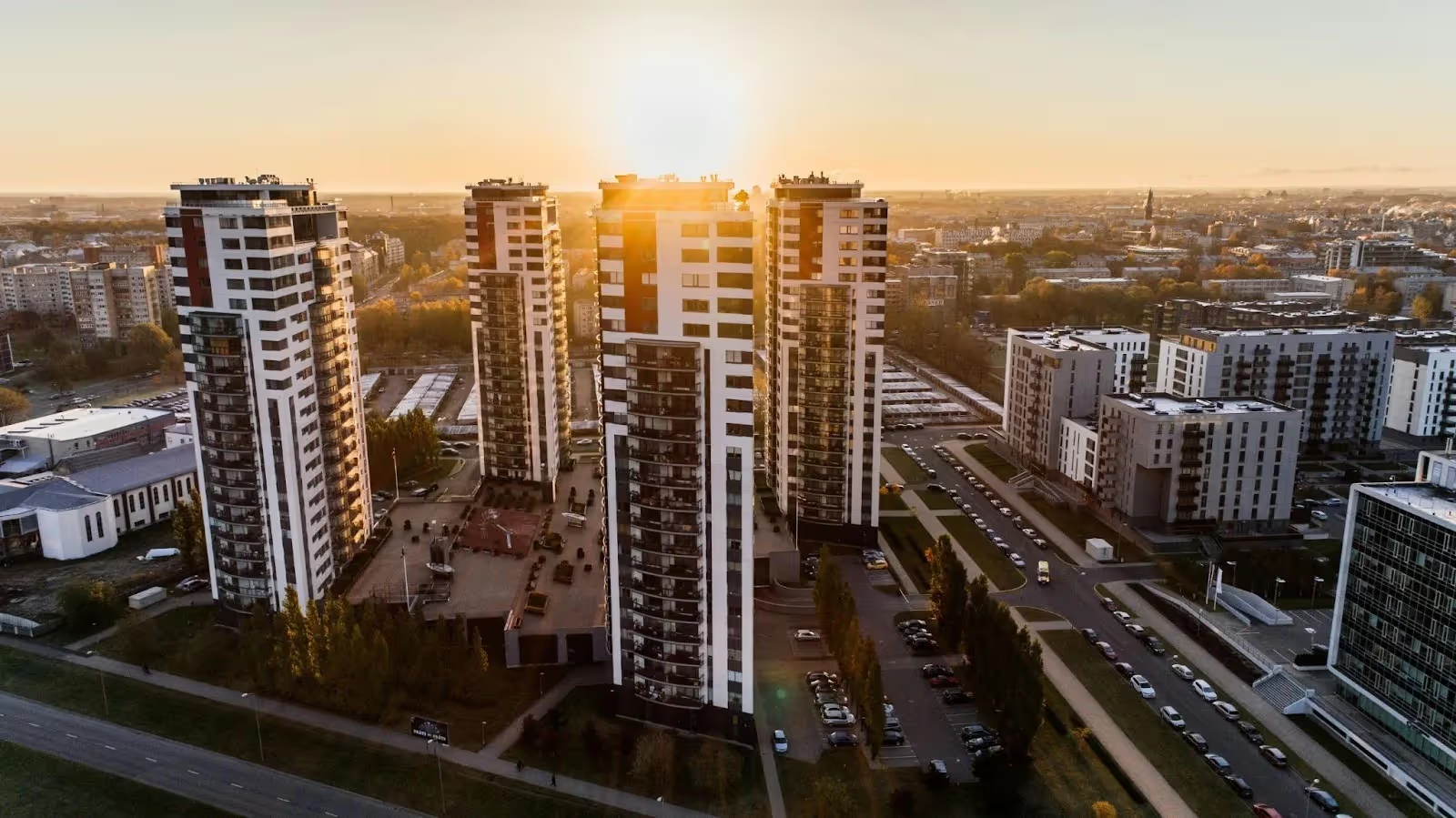
While the short-term looks like oversupply, the long-term picture remains defined by undersupply. Recent Census data analysis places the U.S. housing deficit at 4.7 million units, meaning the industry is still nowhere near meeting long-term national demand.
How is this possible? Because supply and demand don’t move together.
A year of high completions alone cannot fix decades of chronic underbuilding. In many areas, new inventory is only keeping pace with current population growth, not generating a real surplus.
Even with sharp vacancy increases, deliveries will drop after 2025 because of tight lending, construction costs, and capital markets. Many oversupplied metros are expected to balance out sooner than expected.
If it feels confusing, that’s because it is confusing. Two forces are shaping the landscape simultaneously: short-term oversupply and long-term undersupply.
Operators must handle both realities at the same time.
What the Data Doesn’t Tell You
Vacancy, completions, and rent growth offer a useful snapshot of the national picture, but that’s all they are: a snapshot.
They rarely capture the smaller signals inside a portfolio that ultimately determine how revenue holds up in a shifting market.
Operators feeling today’s pressure focus on daily patterns, not headline numbers. These are the subtleties that macro data rarely captures:
1. Renewal Spreads become Harder to Protect
New deliveries bring incentives that reshape expectations.
Residents expecting eight weeks free start negotiating differently, even if their community hasn’t changed. A few hundred dollars in concessions may seem insignificant regionally, but across a portfolio, the NOI impact is substantial.
2. Strength in One Market can Hide Challenges in Another
Multi-market operators often see very different stories unfolding at once: occupancy dipping in one city while renewals hold steady in another. Portfolio averages blur those realities, making choices less clear. That’s when clear portfolio-level insight matters most.
3. Teams feel Compression Earlier than the Metrics do
Leasing teams notice early signs like longer decision times, higher price sensitivity, and prospects comparing competitors, months before official numbers reflect these changes.
4. Data becomes Noisier, not Clearer
During rapid changes, traditional data trends diverge. Prospect activity might spike while leasing conversions plummet or asking rates may increase but current residents enter their notice to chase the concession next door. Without context, data leads to fragmentation instead of insight.
Related: How Multifamily Operators Are Using AI Analytics to Prepare for 2026 Budgets
What Multifamily Operators Need Right Now: Visibility and Timing
In periods of rapid change, it’s easy to pile on new tools and intricate models. Yet during times like these, clear insight is far more useful than added complexity.
Operators don’t need more spreadsheets.
They need:
1. A Unified view of Revenue Risk and Opportunity
Reviewing public market data helps leaders see where risk is growing, whether from concessions, slowing demand, or lease expiration exposure.
2. Early indicators, not lagging ones
Most operational challenges start with small shifts, such as diminished lead quality or changes in tour-to-lease ratios. When teams spot these signals early, they can adjust before the pressure grows.
3. Portfolio-level context
A competitor two blocks away offering eight weeks free matters. A competitor three miles away offering concessions may not. Smart decisions come from seeing how local market dynamics align with the kind of property you run, who you serve, and how your asset is positioned.
4. Clarity around timing
Timing shapes outcomes. Renewal notices sent too late or softening demand spotted only after occupancy slips chip away at performance. Operators who identify trends early make steadier, more confident moves.
What the Multifamily Market in 2026 May Look Like

Forecasts for the multifamily market in 2026 point to a transitional year defined by moderating supply and shifting vacancy trends. Here’s why.
1. Supply is Expected to Recede, Though still Historically High
The construction pipeline is thinning. CoStar Group projects new apartment deliveries will fall by approximately 55% in 2026. Many projects no longer made financial sense under 2023–24 financing conditions, so developers paused or cancelled them. As a result, deliveries will remain high through 2025 but decline afterward, easing pressure in oversupplied metros.
2. Vacancy should Stabilize as Absorption Improves
Vacancy may remain high heading into 2026, but as new supply tapers and demand stays healthy, balance is expected to return. Forecasters (Renting Housing Journal) expect a gradual easing in vacancy throughout the year, particularly in markets supported by strong job and population growth.
3. Operators who Respond Early will see Steadier NOI
As the market changes, operators who spot shifts early and adjust quickly usually perform better. Staying ahead of trends leads to steadier NOI, and in a transitional year like 2026, being proactive will matter even more.
How Rentana Helps Operators Make Sense of a Confusing Cycle
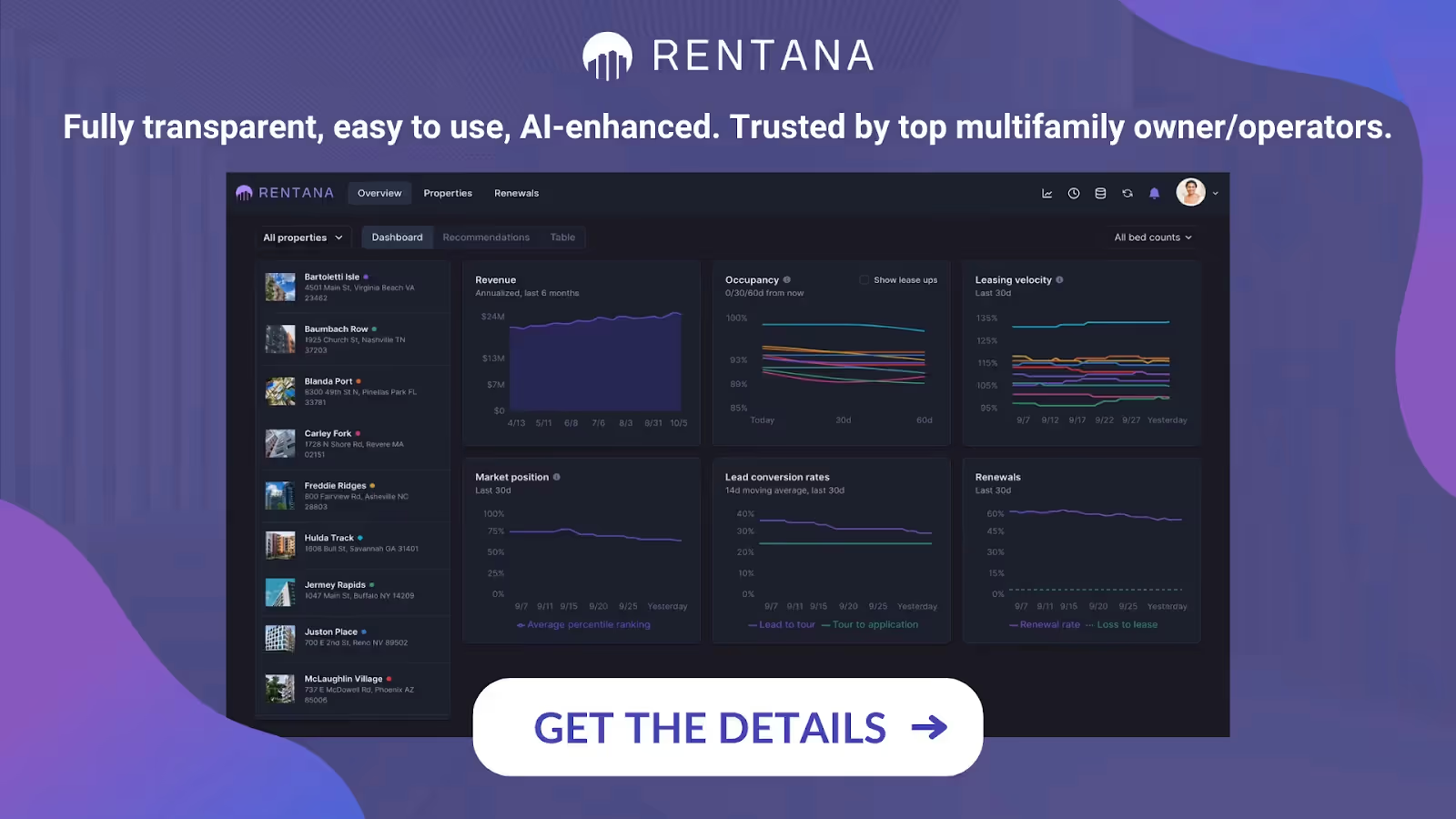
Periods like this make it clear why advanced revenue intelligence matters. It supports teams and sharpens intuition rather than replacing them.
Rentana gives operators:
Early Detection of Emerging Trends
Patterns around turnover, concessions, and demand reveal risk long before it shows up in financial results. Rentana surfaces these signals early so operators can act with confidence.
Simplified, Intuitive Reporting
In times of uncertainty, clarity becomes a critical advantage. Rentana transforms complex data into clear, actionable insights that help teams make more informed decisions.
Related: 2026 Real Estate Market Forecast
Conclusion: Finding Clarity in a Complex Market
The multifamily market in 2026 will continue to balance short-term supply and long-term undersupply. For operators, the challenge isn’t choosing which story to believe. It’s understanding how both shape daily performance and where the real signals lie.
Steady performance comes from seeing the full picture: what the market is doing, how it affects your portfolio, and where action is needed. With better visibility, operators gain the confidence to navigate change without losing momentum.
Rentana exists to support exactly that. We help operators see what’s changing, understand why it matters, and act with stronger timing in every market cycle.